From Vibe Coding to Deal Intelligence: How One LA Broker is Quietly Building a Tech Edge

From Vibe Coding to Deal Intelligence: How One LA Broker is Quietly Building a Tech Edge
From Vibe Coding to Deal Intelligence: How One LA Broker is Quietly Building a Tech Edge

The barrier between “having an idea” and “having a working tool” has essentially collapsed. Most commercial real estate brokers haven’t noticed yet. Jim Klein has.

Klein, an industrial real estate specialist in the Los Angeles market and a seasoned SIOR member, has spent the past stretch of time doing something most brokers his caliber rarely do: building his own technology stack. Not by hiring developers. Not by purchasing enterprise PropTech subscriptions. By sitting down with AI tools and describing, in plain English, exactly what he needs and watching functional software materialize in response.

It’s a practice gaining traction in tech circles under the name vibe coding, and it may be one of the most underappreciated skill sets a commercial broker can develop right now.

The Broker-Builder

There’s a new archetype emerging in commercial real estate. Not a technologist. Not a software entrepreneur. Just a seasoned practitioner who got curious, leaned in, and discovered that building useful tools no longer requires knowing how to code.

Vibe coding works exactly the way it sounds. You describe what you want to an AI. The AI writes the code. You refine it through conversation. You deploy it. The “coding language,” as Jim puts it, is basic English and that’s precisely what makes it accessible to anyone willing to try.

He offers one honest caveat worth passing along: having someone with a programming background nearby during those early sessions helps clear the initial hurdles. The fundamentals of how scripts connect to platforms and APIs aren’t always intuitive the first time. But once you’re past that threshold, the playing field levels quickly and the possibilities expand fast.

Two Platforms, Two Distinct Superpowers

What makes Jim’s approach particularly instructive isn’t just that he’s using AI. It’s how deliberately he’s matched the right tool to the right job. He’s built a two-platform intelligence system, each one purpose-designed for a different dimension of his business.

Gemini: The Market Radar

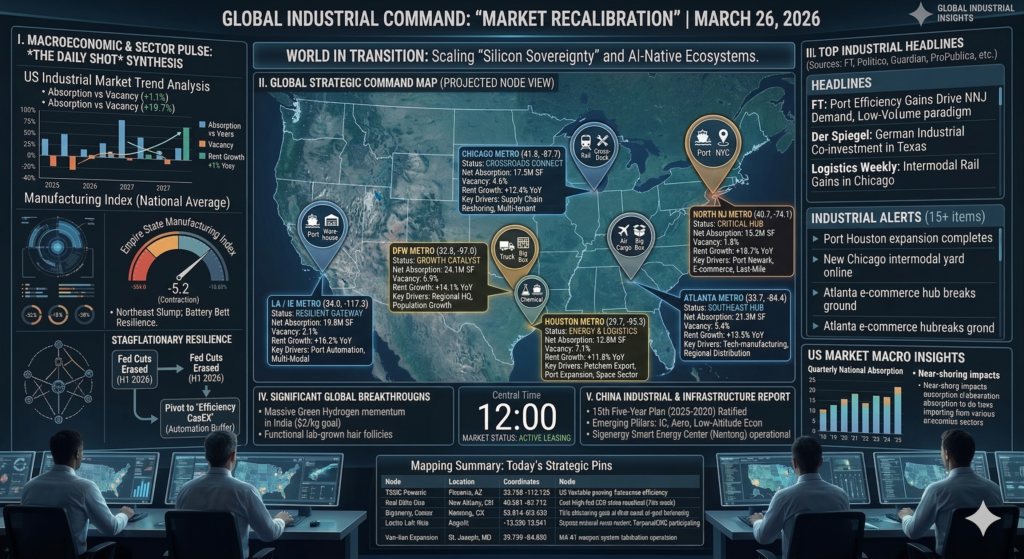
Jim has configured Google’s Gemini as a live intelligence feed for the industrial sector. Every day, it pulls news from sources around the globe, publications and Google Alerts he’s personally curated, and filters everything through a custom keyword ranking system. Words like expansion, growth, layoffs, WARN notice, and default trigger prioritization, automatically surfacing the stories most likely to signal a leasing event, a distress opportunity, or a tenant in motion before the broader market catches on.

What elevates this beyond a standard news aggregator is the Google Maps API integration. Every story arrives with precise location data attached. A logistics company announcing expansion in the Inland Empire isn’t just a headline. It’s a pin on a map, a radius search waiting to happen, a prospecting call that can be made before a competitor has even seen the news.

The infrastructure behind all of this? Google Workspace. Gmail. Sheets. Calendar. Docs. Tools every broker already has open on their desktop every day. What Jim discovered, and what most brokers haven’t yet, is that every one of these tools has script extensions that can be unlocked through AI-generated code. You describe what you want. The AI writes the script. When something breaks, it debugs itself.

The entire workflow is built on tools you already pay for. The only new ingredient is knowing to ask.

Claude: The Market Intelligence Engine

The second platform in Jim’s stack is Anthropic’s Claude, and here the application shifts from market surveillance to deep market knowledge.

Jim has loaded Claude with Los Angeles parcel data and market comparables, effectively transforming it into a conversational database that would have required a dedicated GIS analyst to replicate just a few years ago. From anywhere, including the field, he can ask:

  • “Who are the closest building owners within 1,000 feet of this address?”
  • “How does our listing compare to everything available within a one-mile radius?”
  • “Who owns 123 Main Street?”

Answers come back in seconds, often with maps generated on the fly. And this is just the beginning. CRM data integration is next on Jim’s roadmap, meaning contact history, deal activity, and relationship context will soon layer directly on top of the parcel and market intelligence already in place.

This is what a true deal intelligence platform looks like when it’s built by someone who actually understands their market, not by a software company making educated guesses about what brokers need.

The Question Every Broker Should Be Asking

Jim frames the real challenge with characteristic directness:

“How are you making more deals with AI?”

Not “Are you using AI?” By now, almost everyone can check that box in some form. The sharper question is whether AI is actually changing your deal count, your deal quality, or your competitive position. That requires a different level of intentionality than having a ChatGPT account you open occasionally.

Jim’s framework offers a useful benchmark. His AI stack is:

  • Proactive, not reactive. It surfaces opportunities before he goes looking for them.
  • Location-aware. Every piece of intelligence is anchored to geography.
  • Integrated. Tools communicate across platforms he already uses daily.
  • Field-ready. It works when he’s standing in front of a building, not just when he’s back at his desk.

That’s not a technology experiment. That’s a competitive infrastructure.

The Window Is Open, But Not Forever

The early adoption advantage in AI-powered brokerage workflows is available right now. But windows like this don’t stay open indefinitely. The brokers who will look back on this moment as a turning point are the ones treating AI not as a novelty, but as infrastructure to build on. Quietly. Deliberately. Deal by deal.

Jim Klein’s example makes one thing clear: you don’t have to wait for a PropTech company to package this into a product. You don’t need to hire a developer. You need curiosity, a willingness to experiment, and maybe one person nearby who’s been around code before.

The rest, it turns out, you can figure out in plain English.

Jim Klein, SIOR, is a commercial real estate broker specializing in the industrial market in Los Angeles. His work in AI-integrated market intelligence reflects a growing movement among top practitioners applying practical technology to generate measurable business results.

 

Four Types of Industrial Real Estate Decisions

Four Types of Industrial Real Estate Decisions

Four Types of Industrial Real Estate Decisions


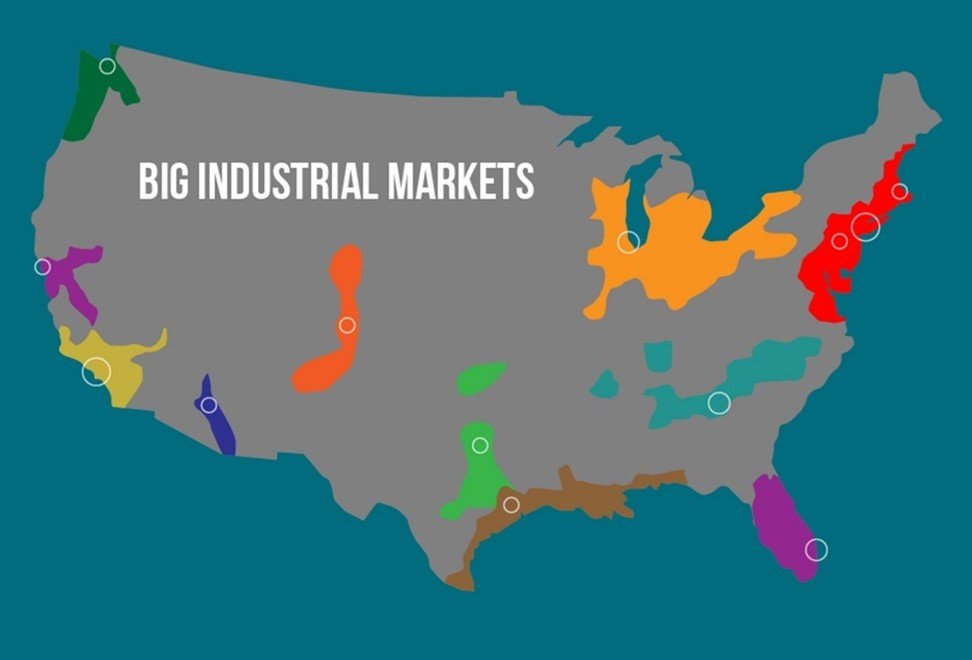
For decades, the U.S. industrial real estate landscape was largely shaped by the flow of consumer goods. e-commerce, brick-and-mortar supply chains, and manufacturer distribution networks. This model is not going away and will be enhanced by more e-commerce. However, a profound shift is now underway. New trade dynamics, tax incentives; and support for AI and Data Centers will re-orient location and capital decisions.  There is a new emphasis on factors crucial for enhanced industrial production. This evolution leads to richer set of criteria for assessing location value with an emphasis on network dynamics, supply chain and underlying AI infrastructure.

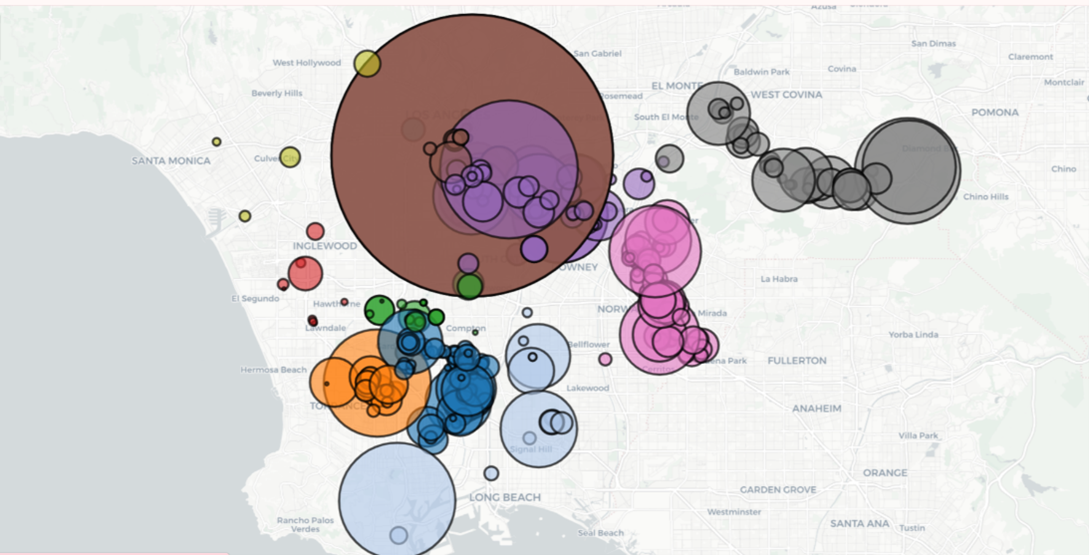
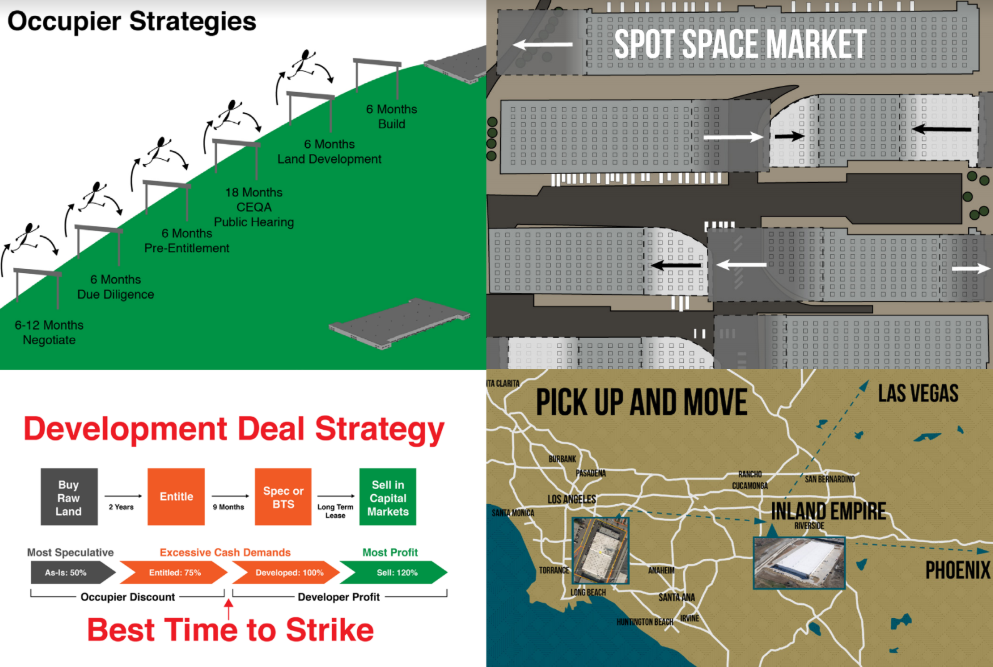
For companies that are facing real estate decisions, we found the following framework helps you determine the type of move you are most likely to take.  The first three type of decisions are accepted as standard procedures in corporate real estate circles. Infrastructure demands, particularly power, connectivity, and location have grown to being singly important.

  1. Incrementalism
  2. Standardization
  3. Value-based
  4. Infrastructure Dependent


1. Incremental Growth: Remaining close to core operations and seeking nearby buildings to facilitates organic expansion or infill needs. This strategy prioritizes maintaining local expertise and established networks. Incremental growth is the most common way to expand. Value is based on proximity.

2. Standardization: Particularly relevant for companies taking multiple facilities to support regional markets or industries. This approach emphasizes consistent specifications and operational efficiency across a distributed network.Common examples are consumer products, industrial supply, and data centers.


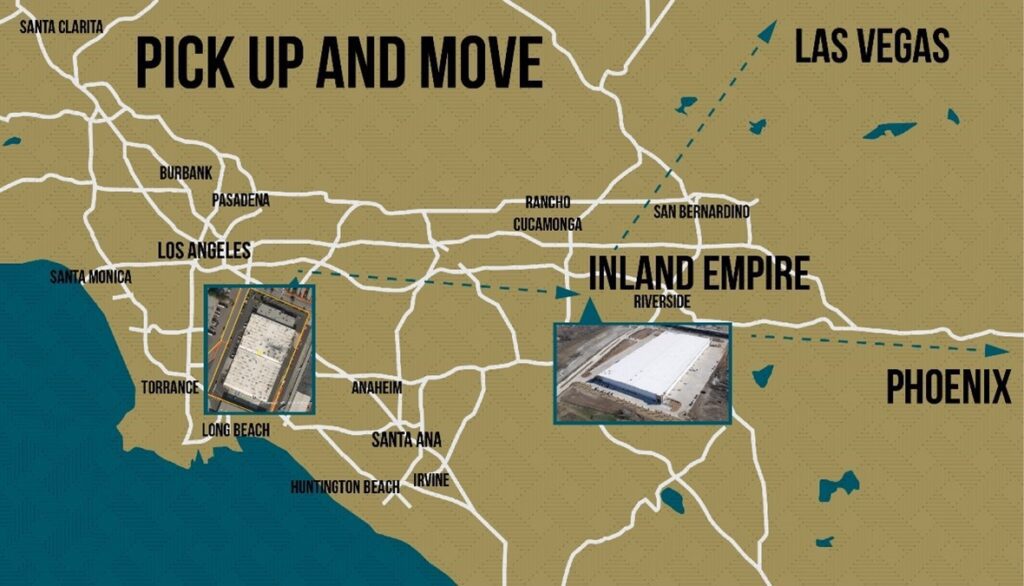
3. Value-Based: Driven by new strategic directions or significant restructuring, this often involves a “Pick Up and Move” to a fundamentally different area, chosen for its long-term alignment with core values and future growth. This frequently occurs when companies leave California for lower costs, fewer regulations or improved synergies with suppliers and customers


4. Infrastructure Dependent: The largest expenditure of industrial development is data centers. Hyperscalers are dependent on huge amounts of power and connectivity on relatively large parcels of heavy industrial land, almost anywhere. Edge data centers are smaller and located in urban centers to serve autonomous vehicles, consumer, shopping, delivery and nearby industrial and commercial facilities.

 To support our clients, we developed these strategies over 45 years. We have custom analytics, self-developed maps and personal relationships across North America and Europe.  Our diagnostics pinpoint the buildings that are right for you. Please contact us with your questions and comments.

Thank you for Subscribing.


Industrial Building Sales

Industrial Building Sales

The Los Angeles industrial real estate market is financialized. That means pricing reflects accepted investment principles. Investment buyers, flush with private capital, are searching for smaller and older buildings than what you would normally expect from fund level buyers. Assets owned by individuals, corporations, families, and partnerships are being sold to large investment groups, funds, and REITS. It started with “Class A” buildings but escalated for almost all industrial buildings with low interest rates after the Great Financial Crisis. Activity surged during Covid, levelled off during the recent period of higher interest rates, and is regaining strength with more capital allocations hitting almost all industrial properties that generate long-lasting income.

In our experience, some building owners prefer comprehensive marketing and others want discretion. We developed our resources to do both:

Conventional Listing Private Listing
Exclusive Non-Exclusive
Market Rate Broker Fee Lower Broker Fee
Generally, No Dual Agency Dual-Agency
Common with Owner/Users Common with Investor/Developer Sales
No Immediate Hurry Deadline
Public – Wider Distribution Confidential and Discrete
Dedicated effort and resources Flexibility – Can sell yourself
Posted online and through Industrial Multiple Distributed to professional buyers

Leasing Industrial Property in Los Angeles County Under the New Green Zone Ordinance

Leasing Industrial Property in Los Angeles County Under the New Green Zone Ordinance

Leasing Industrial Property in Los Angeles County Under the New Green Zone Ordinance

Green Zones

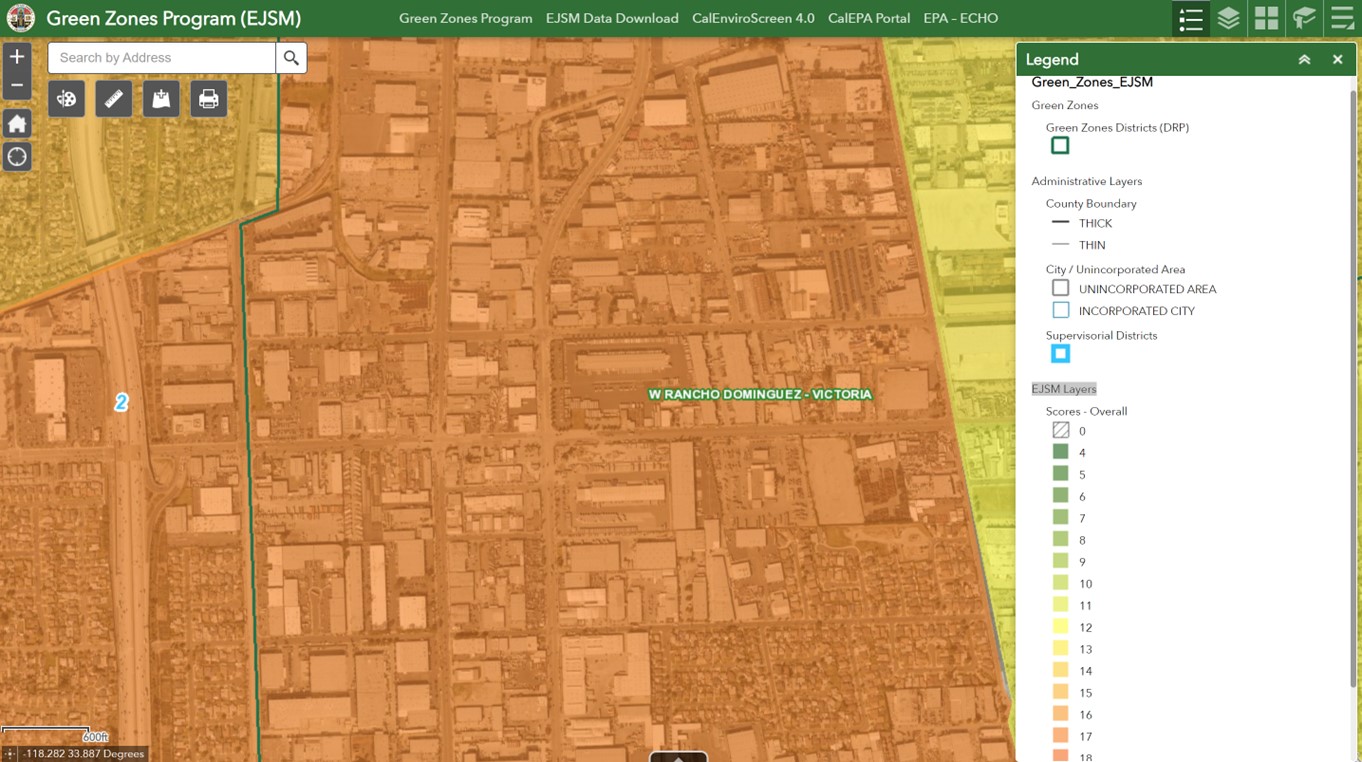
Green Zones are an entirely different way to look at zoning. It is an outgrowth of the Environmental Justice Movement that had its local origins addressing diesel exhaust at the Port Complex in San Pedro Bay. Properties are analyzed and graded based on their contribution to health disparities using the Environmental Justice Screening Method (EJSM). The EJSM is a new tool and strategy that is designed to correct unhealthy conditions by establishing new mitigation mechanisms. The County will use the EJSM for ongoing monitoring and annual reporting to the parcel level.

Depending on the EJSM score, Regional Planning offers four (4) different routes to approval. The simplest is Site Plan Review (SPR) and it is approved administratively in what we use to call, “over the counter”. The other three routes are discretionary and require formal application and Public Hearing at different levels of planning authority. Generally, the greater the health impact, the longer the approvals.
Continue reading “Leasing Industrial Property in Los Angeles County Under the New Green Zone Ordinance”

Blockchain Demo

Blockchain Demo


Transcript

Welcome to Gardena, CA!

The center of industrial real estate for Los Angeles.

I’m Jim Klein and today I will show you, how to use the blockchain to send and receive files, decentrally among trusted parties.

Let’s go inside.

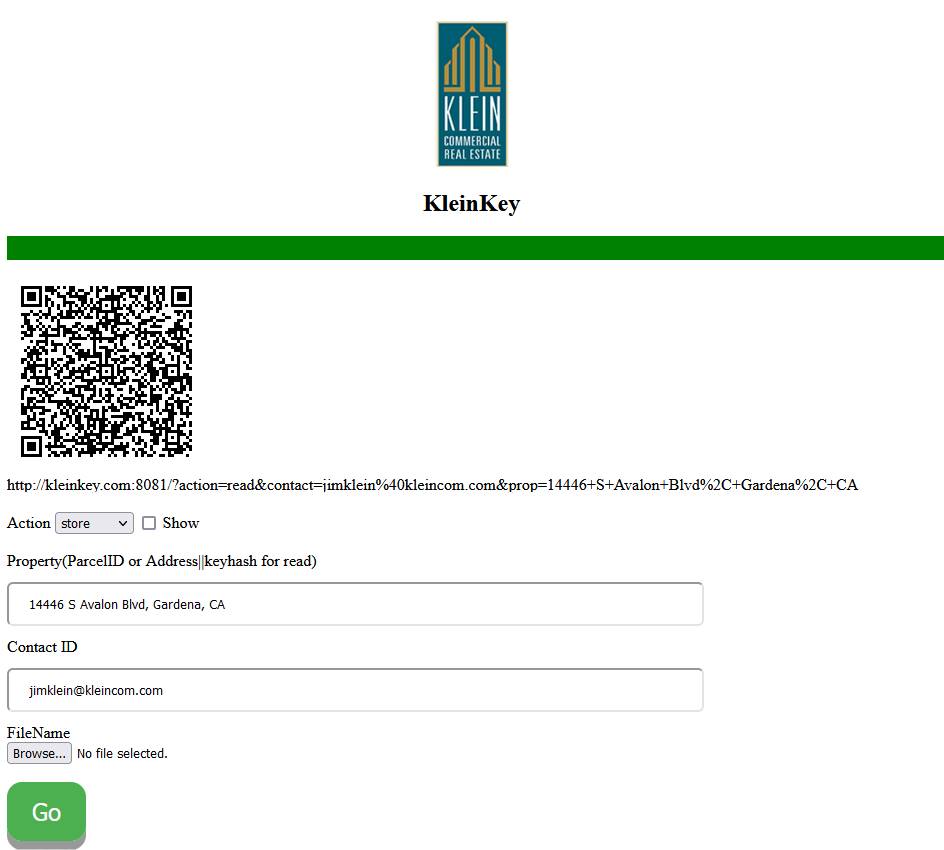
Here’s how it works. We input the address of the property on the top line. In this case, it’s 19475 Gramercy Pl, Torrance, CA. It’s a 47,000 ft manufacturing, industrial storage building. Contact ID is where we can put the user’s email or a customer number that we generate. We include the file and we press go.

After pressing go the program creates a QR code and a link that I can send to the customer. Only parties who have the link or code can open the file. It records on the blockchain to serve as proof.

With the link you can either click on it or put it in your browser, and the file is transmitted to the party you want to send.

My first use case is offmarket industrial real estate. Meta tags can be used to search the blockchain by keyword.

I’m asking for your help to expand the project and make more deals together. Thank you to the innovation committee and you watching.

SIORS: Finding More Industrial Deals By Blockchain

SIORS: Finding More Industrial Deals By Blockchain


We’ll be meeting in Phoenix for SIOR next week. They are bi-annual conferences, and this will be my 60th in attendance. There are three main reasons I attend. I learn from the best brokers and owner/developers in the industry. There are deals to make and I will see longtime friends. The 4th reason this year is to show how blockchain finds more industrial building deals.

Continue reading “SIORS: Finding More Industrial Deals By Blockchain”

2022 Continues – Severe Space Shortages

2022 Continues – Severe Space Shortages

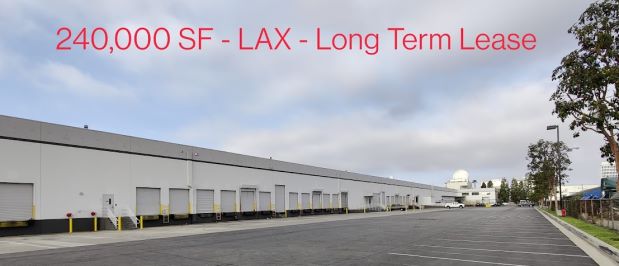
potential 240,000 square foot lease deal near LAX

Acute space shortages are national news. Not only here in Los Angeles, where it’s about the worst, but all over the United States. Many tenants are being caught short and others are taking space far in advance, at greater amounts, and at much higher cost. Price bidding leads landlords to weigh credit, use, and history. Credit is the most important enhancement because it notably increases the value of buildings. Larger landlords also favor tenants that will lease multiple buildings across their national holdings.
Continue reading “2022 Continues – Severe Space Shortages”

Are You Decentralized?

Are You Decentralized?

More real estate opportunities are popping up on decentralized platforms than ever before. Take for instance Los Angeles. There are more industrial buildings sold “off-market” than on. Industrial real estate has always had a decentralized component. Brokers find a good lead. They shop it first to their best clients off-market, decentralized. And if unsuccessful, put it on the market, on a central, MLS-type server for all to search and see. The difference today is that blockchain and cryptography is an electronic evolution that will give customers new ways to profit from their real estate.

Continue reading “Are You Decentralized?”

Can Crypto and Blockchain Secure your Commissions

Can Crypto and Blockchain Secure your Commissions

If you had the experience of driving down the street and seeing a building where you should have been paid and were not, this simple technology is of note. As more deals move “off-market”, I want certainty of commission arrangements. Ruthless competition and extreme space shortages is an explosive combination. In this hyper-intense market, this is one example of how I prove Procuring Cause using Blockchain.
Continue reading “Can Crypto and Blockchain Secure your Commissions”

Commentary on Industrial Markets

Commentary on Industrial Markets

Week of June 25 – Need For Space

The industrial market during the Covid-19 period, now edging back to normality, is a lesson on disruption. The most visible example are container ships backed into the sea and unable to unload goods because there is not enough dock space available at the ports. It is the same at warehouses and container yards: too many products and not enough space.
Continue reading “Commentary on Industrial Markets”